Satisfying Valorant Clips and Phoenix Duelist Guide
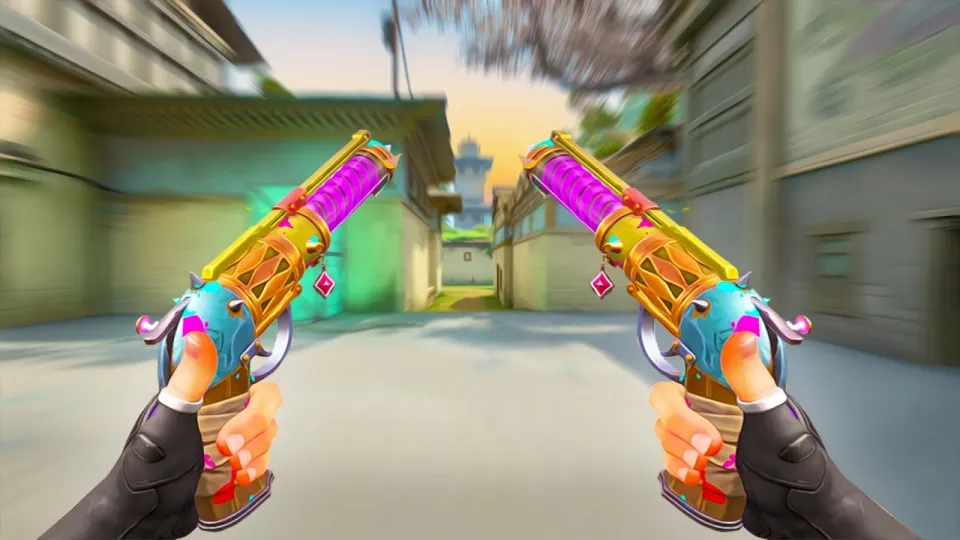
Video: 20 Minutes of Satisfying Valorant Clips
Need articles like this for your video? They help promote it on YouTube and Google — order them in the Telegram bot @sat_sit_bot. Articles with your video embedded are written and posted by the bot itself — on popular topical sites (no ads). Your first 50 articles are free.
· based on the channel Rawzu
Key takeaways
- Rawzu's "20 Minutes of Satisfying Valorant Clips" is a 20-minute compilation of Phoenix gameplay published on 18 January 2025.
- Rawzu plays on 400 DPI with 0.625 in-game sensitivity, 1440x1080 stretched resolution and crosshair code 1-6-2-2.
- Phoenix is an offensive duelist whose Blaze wall blocks vision and deals damage, while Curveball blinds enemies even around corners.
- Hot Hands heals Phoenix when he stands in his own fire, and the Run it Back ultimate lets him respawn at his cast position after dying.
- Rawzu streams live on Kick and releases original music on Spotify, with a second YouTube channel for extra clips.
Valorant is a free-to-play 5v5 tactical shooter from Riot Games where two teams of agents fight over spike sites on attack and defense, and one of the most satisfying ways to play it is the aggressive Phoenix duelist style shown in Rawzu's clip compilation. The 20-minute video collects Phoenix plays built on fast movement, one-taps and ability combos rather than slow default setups. If you want to see that style live, Rawzu streams daily on Kick, where the same aggressive duelist gameplay continues outside the highlight reel.
What makes Valorant a satisfying game to watch
Valorant rewards precision over volume of fire, so a single clean headshot can decide a round, and that is exactly the tension a highlight compilation feeds on. The game runs on a 128-tick server model with a strong emphasis on peeker's advantage, utility usage and economy management, which means viewers can read the story of a round from the buy menu alone. A satisfying clip usually contains three ingredients:
- A fast entry into a contested area, often through smoke or a Blaze wall.
- A one-tap or a short spray that ends the fight before the enemy can trade.
- A movement read, such as a jump peek, a strafe or a reposition after the first kill.
Because rounds last 100 seconds and the first team to 13 wins, momentum swings are constant, and compilations of clean multi-kills capture that swing better than any scoreboard.
Phoenix abilities explained for new players
Phoenix is an offensive Valorant agent who specializes in hunting enemies down while crippling their ability to fire back, which makes him one of the most beginner-friendly duelists in the roster. His kit is built around self-sufficiency: every ability either damages, blinds or heals him, so he does not depend on a dedicated support player to function.
- Blaze (wall): creates a wall of fire that blocks vision and damages anyone who walks through it, letting Phoenix cut open defended areas and cross them safely.
- Curveball (flash): a curved flash that bends around corners, so it blinds enemies who are hiding behind cover and cannot be reached by a straight throw.
- Hot Hands (molly): a thrown fire zone that damages enemies and heals Phoenix if he stands inside his own flames, which makes it a genuine sustain tool on eco rounds.
- Run it Back (ultimate): marks Phoenix's position, and if he dies during the duration he respawns at the mark with full health, turning him into a free entry fragger for one push.
The combination of Hot Hands healing and Run it Back respawn makes Phoenix a durable duelist, and players who like to play aggressively will find his kit forgiving compared to agents with no self-sustain.
Movement, crosshair and settings behind clean Phoenix plays
Rawzu's own settings reveal how much of the highlight reel comes from consistency rather than raw talent alone, and copying a proven baseline is the fastest way for a new player to stabilize their aim. His listed setup is 400 DPI with 0.625 in-game sensitivity, which works out to a very low effective sensitivity suited to precise tracking and micro-adjustments. He plays on a 1440x1080 stretched resolution, a common choice among duelists because stretched models appear wider and easier to hit. His crosshair code is 1-6-2-2, and his hardware includes a Lamzu Maya X mouse, a Zowie H-SR-SE 2 Blue mousepad and a Zowie XL2566K 360Hz monitor.
A practical way to use these numbers:
- Set your DPI and sensitivity first, then leave them alone for at least two weeks.
- Pick one crosshair and stop changing it every session, since crosshair hopping resets your visual memory.
- Practice strafe-shooting in the range, because most Phoenix duels are won by stopping your movement before the shot, not by spraying while running.
Common questions from viewers of the clip
The comment section under the compilation reads like a checklist of everything players wonder about when they watch a fast duelist, and most of those doubts have practical answers. Viewers repeatedly ask about sensitivity and DPI, which suggests many players suspect their own settings are the reason they cannot replicate the movement. Others joke that their own lobbies feature enemies who actually shoot back and use game sense, a fair reminder that highlight reels are curated and not a representative sample of ranked matches. Several comments praise the teammates for being supportive and for the running commentary during clutches, which points to something real: comms and morale matter as much as aim in close rounds. A few viewers also note that watching this kind of gameplay at 3 a.m. makes them want to queue immediately, and one asks for a dedicated peripherals video, which is why the settings section above exists.
How to actually improve at Valorant instead of just watching
Watching satisfying clips is entertaining, but improvement comes from repeating a small number of habits until they become automatic, and Phoenix is a good agent for building them. Start each session with ten minutes of range work focused on one-taps at varying distances, then play two or three deathmatches where your only goal is to stop moving before firing. In ranked games, use Blaze to isolate one angle at a time instead of walling off the entire site, and save Curveball for the moment you actually commit to a fight rather than throwing it at the start of every round. Track your economy: a Phoenix who buys a Vandal and full shields on a second-round bonus is making a deliberate choice, not a default one, and understanding that decision is worth more than any single flick. Finally, review one lost round per session and ask what utility you wasted, because duelists lose more rounds to empty cooldowns than to bad aim.
Useful links from the video
- Live streams and daily broadcasts: https://kick.com/rawzu
- Original music by Rawzu: https://open.spotify.com/artist/6DbATPR1PTNMx7U918bg1Q
- Community Discord server: https://discord.gg/axnFwyvxp3
Final thoughts on the Phoenix playstyle
Rawzu's compilation works as a study of what an aggressive duelist looks like when movement, aim and utility are all pointed in the same direction: enter fast, trade cleanly, and use self-healing and the ultimate to take risks that other agents cannot afford. The settings shared in the video, from 400 DPI and 0.625 sensitivity to the 1440x1080 stretched resolution, give viewers a concrete starting point instead of vague advice. Phoenix remains one of the cheapest agents to learn in terms of decision-making, because his kit answers the two hardest questions in a duel, namely how to blind the enemy and how to survive the trade. If you want more of this gameplay in real time rather than in a highlight reel, follow Rawzu on Kick for daily streams.
Source: 20 Minutes of Satisfying Valorant Clips · Markdown version
Questions & answers
What sensitivity and DPI does Rawzu use in Valorant?
Rawzu lists 400 DPI with 0.625 in-game sensitivity, which is a low effective sensitivity built for precise micro-adjustments. He also plays on a 1440x1080 stretched resolution with crosshair code 1-6-2-2. Copying these values is fine as a baseline, but you should keep them unchanged for a couple of weeks before judging them.
Is Phoenix a good agent for beginners in Valorant?
Yes, Phoenix is one of the most forgiving duelists because every ability serves him directly: Blaze blocks vision and damages, Curveball blinds around corners, Hot Hands heals him and Run it Back gives him a free respawn. That self-sufficiency means new players do not need a dedicated support to take fights. The trade-off is that his utility has short range, so he must commit to close fights.
How do players get clean one-taps like in satisfying Valorant clips?
Most clean one-taps come from stopping movement before firing, keeping the crosshair at head level and taking short, controlled duels rather than spraying. Highlight reels are curated, so they show the successful attempts and hide the failed ones. Practicing strafe-shooting in the range and playing deathmatches with a single goal per session builds the habit faster than grinding ranked blindly.
Where can I watch Rawzu play Valorant live?
Rawzu streams daily on Kick at https://kick.com/rawzu, which is linked in the description of the clip compilation. The same description points to his original music on Spotify at https://open.spotify.com/artist/6DbATPR1PTNMx7U918bg1Q and his Discord community at https://discord.gg/axnFwyvxp3. He also runs a second YouTube channel for additional clips.